Calculator
Watch Investment Calculator
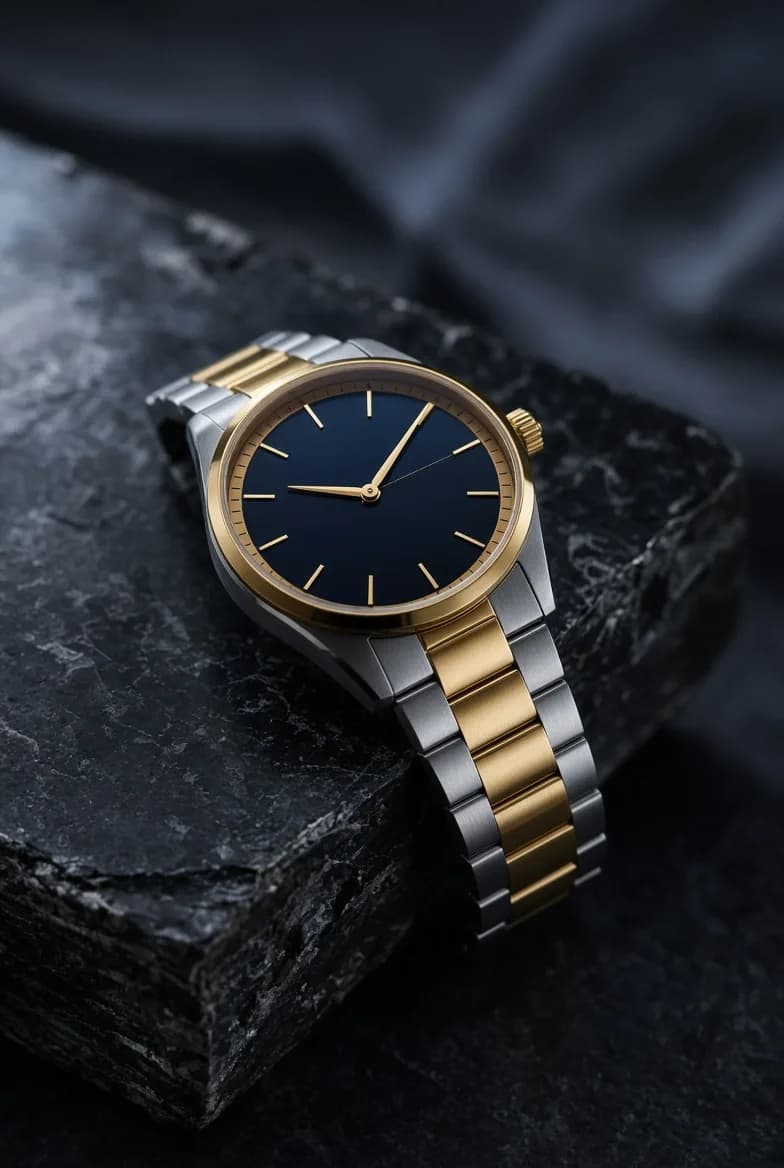
The watch
Retail sets your allocation cost. Market is today's value and the starting point for every projection.
Authorized dealer list price.
25% above retail. Projection starts here.
Cost of holding
The line item that turns most 'appreciating' watches into losses.
Typically 1–2% of market value on a scheduled policy.
Charged only in the years a service actually falls due.
Dealer consignment or auction fees taken from the sale.
Net after 5 years
−$3,592
loss after costs and commission
-5.3% annualized
-1.2% gross annualized
Total across the holding period
Does not break even within 5 years at these assumptions.
Value versus what you actually keep
The gap between the two lines is insurance, servicing, and commission.
- Market value
- Value after fees & holding costs
How the numbers work
The three costs that decide it
The selling commission
The largest single deduction and the one most often forgotten. A dealer taking a watch on consignment typically keeps 10 to 20%; an auction house charges the seller a commission on top of the buyer's premium. On a $30,000 watch that is $3,000 to $6,000 gone the moment you sell, before anything else is counted.
Insurance
A scheduled personal-property policy on a valuable watch runs roughly 1 to 2% of insured value per year. On a $50,000 piece held ten years that is $5,000 to $10,000 — frequently more than the appreciation the watch is expected to deliver.
Servicing
Charged in lumps rather than continuously, which is why this calculator only applies it in the years a service actually falls due. A three-year holder of a modern Rolex may pay nothing; a ten-year holder of a complicated Richard Mille could pay three times.
Frequently asked questions
- Are luxury watches a good investment?
- A small minority are; most are not. Roughly a handful of references — steel Rolex sports models, discontinued Patek Philippe Nautilus variants, and certain Audemars Piguet Royal Oaks — trade above retail. The great majority of luxury watches sell for less used than new, and once insurance, servicing, and a selling commission of 10% or more are counted, even modest paper gains frequently turn into net losses.
- What costs does this calculator include that others do not?
- Three that matter. Insurance, typically 1 to 2% of value per year on a scheduled policy. Servicing, charged in the years it actually falls due rather than smeared evenly, because a three-year holder may never pay for one. And the selling commission a dealer or auction house takes, which is the single largest deduction and the one most often ignored.
- How much does watch servicing cost?
- A full service runs roughly $700 to $1,000 for a Rolex or Omega, $1,800 to $2,600 for Patek Philippe, Audemars Piguet, or A. Lange & Söhne, and considerably more for complicated pieces. Recommended intervals range from about 3 years on some high-performance movements to 10 years on modern Rolex calibres. That interval matters as much as the price.
- Should I buy at retail or on the grey market?
- If you can obtain an allocation at retail on a reference that trades above it, that is the strongest position available — you hold equity from the day you collect the watch. If the reference trades below retail, buying pre-owned is simply cheaper. The route you take changes the return more than anything that happens afterwards.
- What happened to watch prices after 2022?
- The secondary market corrected sharply from its early-2022 peak. Some references lost more than half their value, and the Patek Philippe Nautilus 5711 is the widely cited example. Prices have since stabilized well above pre-2020 levels but far below the peak. Anyone modeling future returns should treat that volatility as a permanent feature of the market rather than an anomaly.
Keep going
Compare specific references, or price an allocation.