Last updated · Published by Luxemetry · Editorial methodology
One Tesla row, and what it assumes
The speedometer says things physics used to charge more for. That is the picture. Term, miles, money factor, and residual are the error signal — and the Plaid's signal reads like every other six-figure EV's, only cheaper.
Luxemetry carries one Tesla row: the Model S Plaid, at a $96,000 sticker. I do not invent a monthly for a Model S Long Range, a Model X, a Model 3, or anything with a Cybertruck badge. Those are not calculator rows on this site.
All figures assume 36 months, 10,000 miles a year, a 0.0027 money factor (6.48% comparison shorthand, not loan APR), 10% cash down, capitalized fees, cash fees, and 7.25% tax on the payment. Due at signing is the calculator's 10% down plus fees and the first month. Data snapshot: August 2026. Not dealer quotes.
Model S Plaid. MSRP $96,000. Residual 44% ($42,240). Market adj. −2%. About $1,661 a month. Due at signing $12,461. Cash over the term $70,601.
No printed sticker to quote — the configurator is the price
This guide cites no official Tesla page, because Tesla does not hold prices still long enough to cite. The company sells direct, reprices online without model-year ceremony, and the number in the configurator on the day you order is the only number that exists. Fetch-and-quote journalism ages badly against that; a model with stated assumptions ages better.
The site's $96,000 row is the August 2026 snapshot of that moving target. The −2% market adjustment is small because there is no dealer desk to grind: Tesla's discounting arrives as inventory-car markdowns and price cuts, not negotiation.
That last part changes the playbook. Every other guide in this series says to negotiate the selling price first. On a Tesla you cannot — what you control instead is timing (cuts tend to cluster at quarter-end) and the choice between custom order and discounted inventory car.
Tesla's own lease terms, money factor equivalents, and residuals live inside its checkout flow and change without notice. I model with this site's standard assumptions instead — stated, fixed, comparable across every row.
A thousand horsepower at the EV cluster's usual residual
A lease is a rental of depreciation. The Plaid residuals at 44% of $96,000 — $42,240 back to the bank, $53,760 of forecast depreciation to rent. That 44% sits dead in the six-figure EV cluster this site models: Taycan 46%, RS e-tron GT 45%, i7 42%, Air Sapphire 38%. The badge differs; the electrons age the same.
What the Plaid does differently is the denominator. At $96,000 it is the cheapest car in that cluster by $10,000, so the same ugly percentage produces the second-smallest bill: about $1,661 against the Taycan's $1,531 — the Porsche wins on residual and discount — and far under the i7's $1,812 and the e-tron GT's $2,018.
The comparison that earns the guide its keep: the Lucid Air Sapphire, the other thousand-horsepower American EV sedan, models at about $4,345 on its 38% residual. The Plaid delivers the same acceleration theater for 38% of the payment. The Lucid answers with a nicer cabin and rarity; the spreadsheet does not price those, and I will not pretend it does.
Model S Plaid (this site). MSRP $96,000. Residual 44%. About $1,661 a month. Same term, miles, and money factor throughout.
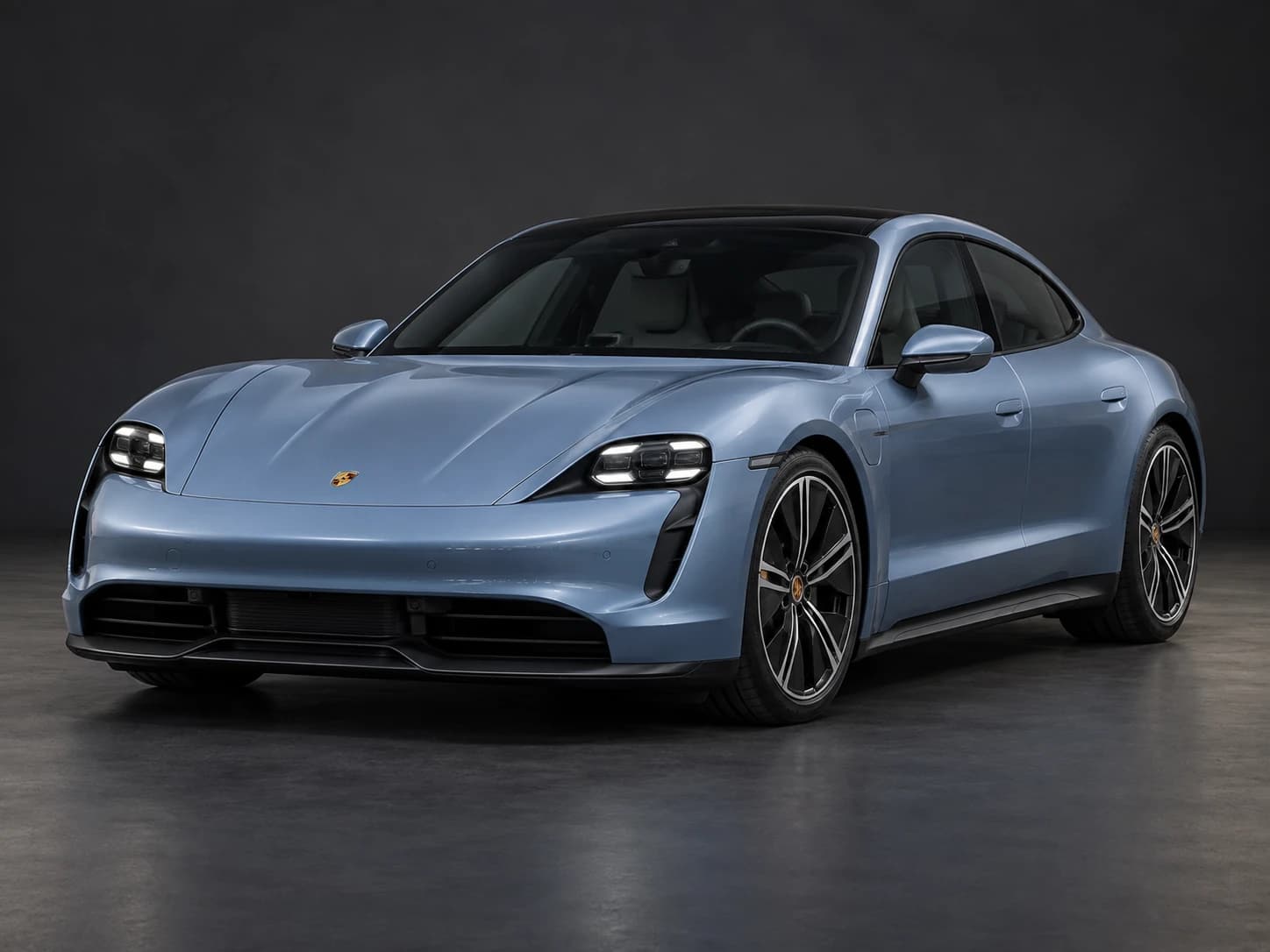
Porsche Taycan (this site). MSRP $106,000. Residual 46%. About $1,531 a month — the cluster's value leader on residual plus discount.
Lucid Air Sapphire (this site). MSRP $250,000. Residual 38%. About $4,345 a month — the other 1,000-hp sedan, at 2.6× the payment.
What three and five years actually cost
Three-year modeled retention is 47% — the Plaid sheds $50,880 of its $96,000 sticker, and years of Tesla's own price cuts have taught the used market to anticipate more of them. The 44% bank residual barely undercuts the 47% retention; there is not much cushion in this contract for the bank, which is one reason subsidized Tesla lease programs come and go.
Five-year total cost of ownership at 5,000 miles a year models at $87,575, about $1,460 a month. The standout line is maintenance: about $900 a year, the lowest of all 44 rows on this site — no oil, no valve adjustments, brakes that regen mostly spares. Insurance pushes the other way at about $3,400 a year; a 2.0-second sedan is priced like one by underwriters.
Lease at $1,661 versus own at $1,460: ownership models cheaper per month, but only if the 47% retention holds — and Tesla's repricing habit is the specific risk the lease removes. A price cut the week after you buy is your equity; the same cut during a lease is the bank's problem.
What I do with a Tesla order page
There is no selling price to agree, so I work the levers that exist: inventory cars against custom orders, quarter-end timing, and the federal or state incentives — in a lease they flow to the bank, and a clean deal passes them into the cap cost visibly.
I still demand the five inputs before signing — capitalized cost, residual, money factor equivalent, term, mileage allowance — from Tesla's own lease screen, and I put them into the lease calculator. If the formula and the screen disagree, a fee is hiding somewhere flat design cannot hide it.
These estimates use 10,000 miles a year. If I need more, the residual falls; buying the miles up front beats the excess-mileage bill at return. A large check at signing is prepaid depreciation, not equity — and historically, Tesla leases have not offered a buyout you would want anyway.
Frequently asked questions
- How much is it to lease a Tesla Model S Plaid in 2026?
- On Luxemetry's 36-month, 10,000-mile estimate at a 0.0027 money factor, a Model S Plaid is about $1,661 a month with $12,461 due at signing and $70,601 in cash over the term. That is a site model on a $96,000 row; Tesla's checkout shows its own live terms.
- Why is no official Tesla price cited here?
- Tesla reprices its configurator without notice and sells direct, so any printed price ages in weeks. This site models a $96,000 August 2026 snapshot with stated assumptions instead of chasing the configurator.
- What is the residual on a Model S Plaid lease?
- This site models 44% for 36 months and 10,000 miles — $42,240 on the $96,000 row — in line with the six-figure EV cluster (38–46%). Modeled three-year market retention is 47%; Tesla's own price cuts are the main downside risk to both numbers.
- Is a Plaid cheaper to lease than a Lucid Air Sapphire?
- By a wide margin: about $1,661 against about $4,345 on identical assumptions. The Sapphire's $250,000 sticker and site-lowest 38% residual put its payment at 2.6× the Plaid's despite similar horsepower.
- Do these numbers include tax and fees?
- They are Luxemetry calculator outputs under the site's standard assumptions, including a modeled 7.25% tax on the payment. Due at signing is 10% down plus fees and the first month. Your state's tax method and Tesla's live fees will differ.
Sources & verification
These references support the published rules, service intervals, and rate examples used in this guide. Luxemetry's calculator outputs remain modeled estimates rather than quotes.
- Tesla Current Offers — live lease/APR promotions; terms change without notice, no Model S Plaid worksheet
Tesla, Inc. · Checked September 2, 2026
- Data Sources & Calculation Methodology
Luxemetry · Checked September 2, 2026
- Taycan models — official US model page with starting prices and example lease rates
Porsche Cars North America · Checked September 2, 2026
Run the numbers
Put what you have just read into the calculators.